


A Chain Block that slips under load is a serious safety warning—not a fault to troubleshoot with repeated test lifts or improvised brake adjustments.
For after-sales maintenance teams, the priority is to keep personnel clear, arrange safe load recovery, and remove the hoist from service before any internal inspection.
Worn or contaminated brake friction surfaces, damaged ratchet components, or incorrect assembly may compromise load holding, but the cause requires checks specific to the model.
This guide explains common brake-related faults, the warning signs to document, and safe next steps for diagnosis, repair, and return to service following manufacturer instructions.
If a load is currently suspended, stop normal operation and follow the site emergency procedure. Any recovery must use an approved plan and competent personnel.
- Establish an exclusion zone around and beneath the suspended load. Keep everyone out of its potential fall path.
- Arrange controlled recovery using suitable, independently rated equipment and approved lifting points. Do not dismantle or adjust the loaded hoist.
- Once the load is safely supported and the hoist unloaded, isolate and tag the unit against further use.
- Record its model, serial number, rated capacity, estimated load, and the operating sequence when slipping occurred.
Which Brake Faults Can Make a Chain Block Slip?
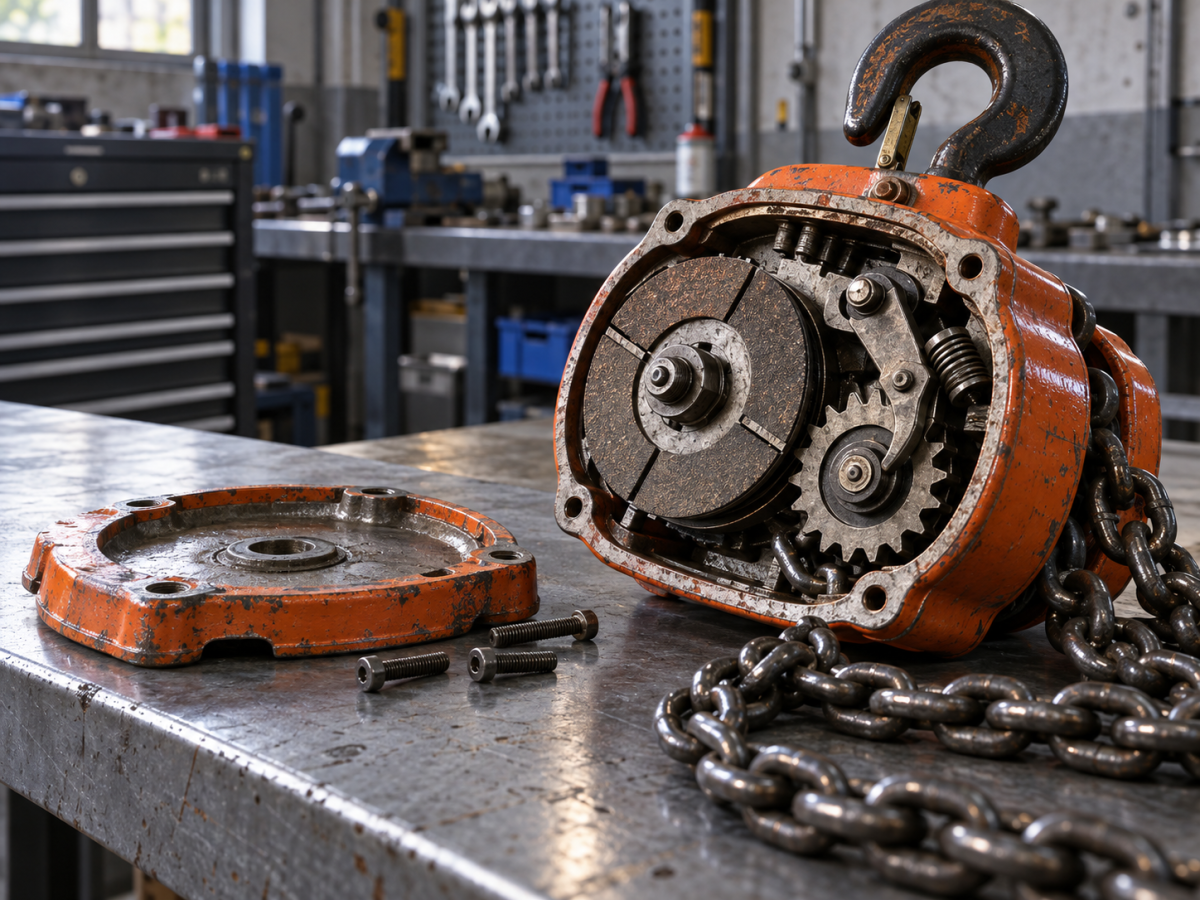
Many manual chain blocks use a mechanical load brake with friction discs, a ratchet wheel, and pawls. Component arrangements and inspection limits vary by model.
Friction surfaces contaminated by oil or grease can lose holding capacity. Incorrect lubricant application, leakage, or servicing errors may introduce contamination into the brake assembly.
Worn, glazed, cracked, or heat-damaged friction components can also reduce braking performance. Inspect and measure them against the manufacturer’s limits; appearance alone cannot establish serviceability.
Damaged ratchet teeth, sticking pawls, or defective pawl springs may prevent reliable engagement. Clicking sounds alone do not prove that the load-holding mechanism works correctly.
Incorrect assembly after maintenance can change brake operation. Missing parts, reversed components, unsuitable replacement discs, or incorrect clearances require verification against the exact service documentation.
Some designs use threaded components to generate brake clamping force. Damage, corrosion, or restricted movement in these parts can interfere with engagement and require specialist assessment.
Is the Brake Actually Slipping, or Is Something Else Moving?
Before attributing movement to the brake, establish what moved: the load chain through the hoist, the load within its rigging, or the suspension arrangement itself.
Chain jumping over the load sheave, damaged gearing, and rigging movement can resemble brake slip. These conditions require inspection beyond the brake assembly alone.
Document existing observations without recreating the incident. Note whether movement occurred during lifting, lowering, or after releasing the hand chain, and whether it was intermittent.
- Load creeps after stopping: Record the direction and any observed delay; investigate the complete holding mechanism.
- Sudden drop or chain jump: Include chain seating, load sheave condition, and drivetrain damage in the inspection.
- Problem follows servicing: Check assembly records, replacement part numbers, and lubricant application against the manufacturer’s instructions.
These observations help prioritize inspection; they cannot confirm the failed component. A chain block that slips even once requires withdrawal from service pending competent assessment.
What Should Maintenance Teams Check Before Repair?
Obtain the correct manual, exploded parts drawing, and inspection criteria before opening the unloaded hoist. Refer uncertain findings to the manufacturer or an authorized service provider.
Check for overloading, side pulling, impact loading, corrosion, and unauthorized modifications. Inspect the load chain, hooks, suspension, casing, and drivetrain alongside the brake components.
Keep oil and grease away from brake friction surfaces unless the manufacturer explicitly specifies otherwise. Load-chain lubrication and internal brake requirements must be treated separately.
Do not prescribe generic tightening settings, sanding methods, or solvent cleaning. Whether a component can be cleaned, adjusted, or reused depends on the manufacturer’s procedure.
When Can the Chain Block Return to Service?
Release requires an identified cause, an approved repair, and documented verification. Use specified replacement parts and replace associated components together where the manufacturer requires it.
A freely moving hand chain or successful unloaded check does not demonstrate load-holding capacity. Complete the prescribed functional checks and any required load testing.
Testing must follow applicable requirements and manufacturer procedures, using suitable facilities and competent personnel. Do not improvise test loads or assume a universal test percentage.
Record inspection findings, replaced parts, test results, and release authorization. If the cause remains uncertain or acceptance criteria are unavailable, keep the hoist withdrawn.
The practical rule is clear: secure the situation, establish why movement occurred, and verify the repair. Repeated trial lifts cannot establish that a slipping hoist is safe.