


Related Posts
- ▶ Choosing a Chain Block for Low-Headroom Lifts: Capacity and Clearance
- ▶ Manual Pallet Truck Not Lifting? Hydraulic Faults and Practical Checks
- ▶ Lifting Tools for Machinery Installation Where Crane Access Is Limited
- ▶ Lifting Gear and Rigging Equipment Explained: Roles in a Typical Crane Lift
- ▶ Toe Jacks vs. Machinery Skates: Which Tools Does Your Machine Move Need?
- ▶ Why Does a Chain Block Slip Under Load? Brake Faults and Safe Next Steps
Send Us A Message
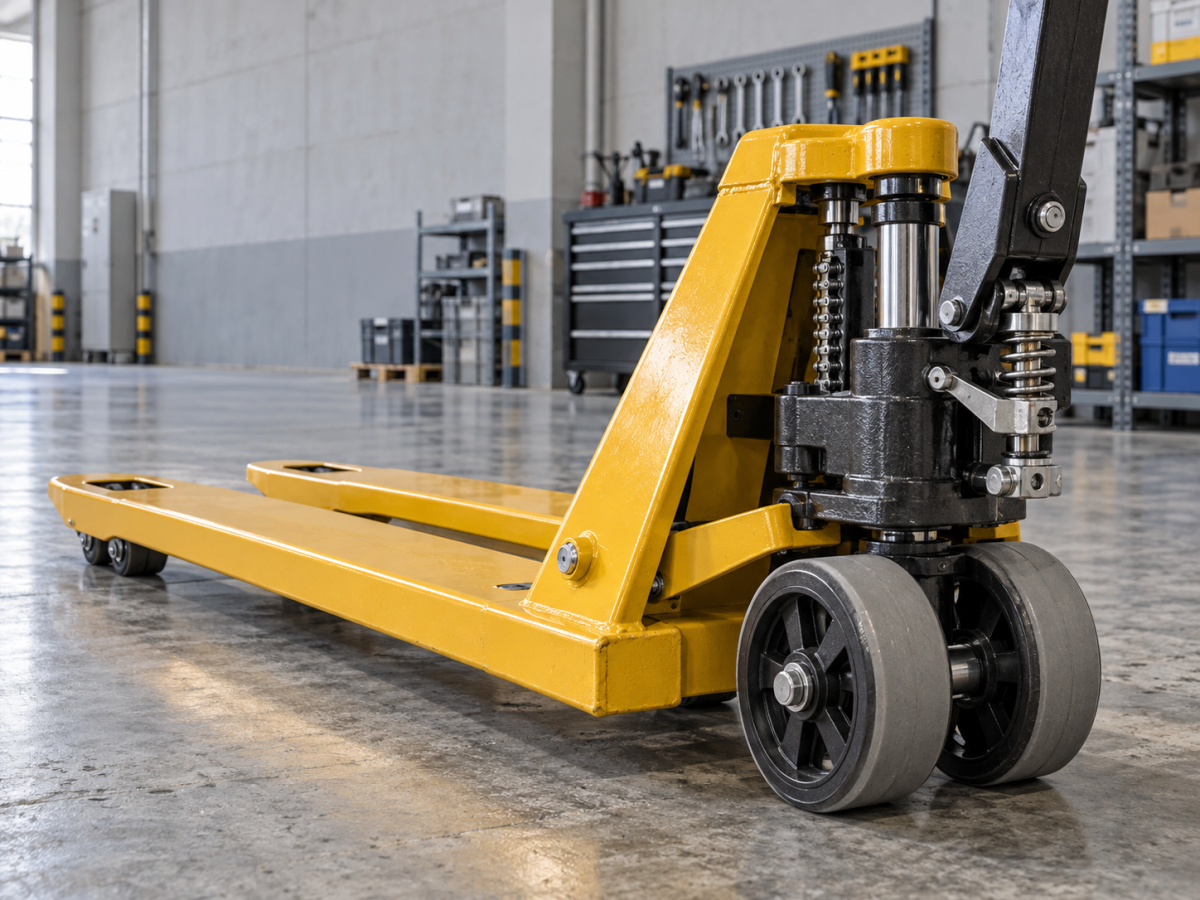
Manual Pallet Truck Not Lifting? Hydraulic Faults and Practical Checks
A manual pallet truck that will not lift does not necessarily need a new hydraulic pump. A release valve held slightly open, low oil, or trapped air can produce similar symptoms. The quickest way to narrow down the fault is to check whether the forks rise unloaded, whether they hold position, and what changes when a load is applied.
Begin with the truck unloaded on firm, level ground and the forks fully lowered. Check the manufacturer’s service instructions before adjusting the linkage or opening the hydraulic unit. Never loosen hydraulic fittings under load or place any part of your body beneath raised forks.
Identify how the lifting failure behaves
Before adding oil or ordering parts, observe the fault through a few normal handle strokes. These patterns help determine which checks should come next:
- No lift and little pumping resistance: Check that the control is in the lifting position and the release linkage allows the valve to close. Low oil, trapped air, or a pump fault may also cause this behavior.
- Forks rise unloaded but fail with a load: Check load weight and distribution, then investigate pressure loss through valves or seals.
- Forks rise but gradually sink: Look for external leakage and a release valve that does not seat fully. Internal leakage is also possible.
- Forks stop below normal height: Low oil may be limiting cylinder travel, but mechanical obstruction or damaged lifting components must also be considered.
These symptoms guide diagnosis; none identifies a failed component by itself. A truck that lifts empty forks has demonstrated movement, but it has not demonstrated adequate pressure under load.
Check the load and release linkage first
Confirm that the load is within the truck’s rated capacity and positioned according to its loading instructions. A concentrated or uneven load can change how the truck behaves. Also inspect the fork linkage, rollers, and pallet clearance for binding. If the handle becomes unusually hard to move without the forks rising, stop forcing it and check for obstruction or overload.
Next, watch the release mechanism while moving the handle control between lift, neutral, and lower. Depending on the design, a chain, rod, or cable operates the lowering valve. If it remains too tight in the lifting position, the valve may stay slightly open, allowing oil to return to the reservoir instead of building lifting pressure.
Check for damaged parts, sticking pivots, and recent adjustment work. Adjust only to the model’s specified procedure. Excessive adjustment can solve one symptom while preventing proper lowering or causing unintended lifting in neutral.
Check hydraulic oil without creating another fault
Clean around the reservoir plug before opening it. With the forks fully lowered, check the level using the procedure and reference point specified for that hydraulic unit. Do not assume that filling the reservoir to the top is correct. Overfilling can interfere with operation or force oil out as the forks descend.
Use the specified hydraulic oil grade. Engine oil, brake fluid, and an arbitrary thicker oil are unsuitable substitutes. Increasing viscosity to disguise internal wear can impair pumping and lowering, especially in colder conditions.
If the oil level is low, inspect the pump plunger, cylinder, plugs, and nearby surfaces for leakage. Topping up restores the oil supply but does not repair the leak. Milky oil suggests water contamination; visible debris or persistent foaming also warrants attention before continued operation.
Bleed trapped air using the correct procedure
Air in the hydraulic circuit can cause erratic lifting, a spongy pumping feel, or incomplete travel. It may enter after transport, hydraulic service, or operation with insufficient oil.
Many manual pallet trucks use a bleeding procedure that involves holding the control in the lowering position while cycling the handle unloaded. The exact sequence varies by design, so use the truck’s service instructions. Do not improvise by loosening pressurized fittings.
After bleeding, recheck the oil level as directed and test unloaded movement. If the symptom quickly returns, investigate leakage, oil condition, or another path for air entry. Repeated bleeding should not become a substitute for finding the cause.
When valves, seals, or the pump need attention
If the linkage closes correctly and the oil supply is sound, persistent failure points toward an internal hydraulic fault. A contaminated or damaged check valve can prevent the pump from transferring or retaining oil effectively. A leaking release valve or worn seal can allow pressure to escape internally even when no oil appears outside.
A truck that sinks after lifting deserves particular attention. Check that the release mechanism returns fully before dismantling the unit. If it does, valve-seat damage or internal seal leakage becomes more likely. Lower the load and remove the truck from service until repaired.
When lifting works unloaded but fails under an appropriate load, pressure testing may be needed to distinguish pump wear, valve leakage, and relief-valve problems. Use the specified equipment and procedure. Do not increase the relief-valve setting to make the truck lift. That adjustment can conceal the fault and permit excessive loading.
Verify the repair before returning to use
After repair, check smooth lifting, neutral operation, controlled lowering, and leakage with the truck unloaded. Then follow the manufacturer’s functional test procedure with a suitable known load, checking for drift and abnormal handle resistance. Keep clear of the load throughout testing.
Record the original symptom, adjustments, oil used, and replaced components. If replacement parts are needed, identify the truck and hydraulic-unit model first: similar-looking pumps and seal kits may have different internal dimensions or valve arrangements.
- Previous Article:No more articles
- Next Article:No more articles